The Inaugural USA Science & Engineering Festival will be the country’s first national science festival and will descend on the Washington, D.C. area in the Fall of 2010. The Festival promises to be the ultimate multi-cultural, multi-generational and multi-disciplinary celebration of science in the United States. On this blog, you can keep updated on Festival events and scheduling, and follow along as the Festival's organizers and presenters further discuss the ideas and themes that shape the agenda.
"Wake up, wake up!" My father shook me gently and indicated to follow him into the living room early in the morning July 1969. There in a remote town in central Africa, a group of people were gathered around a radio avidly listening. "Listen, remember this moment the rest of your life," Dad said, "Man is landing on the moon right now."
Well, I certainly did remember that moment for the rest of my life. I confess I do not remember the actual radio broadcast, but I do remember my father's exhortation. He was a science teacher and Africa was our playground. I remember expeditions along remote rivers to map their courses, long forest treks following the trails of army ants, exploring sand banks on the Zambesi to prospect for diamonds, gazing at an endless panoply of stars on a moonless night on a beach on the shores of Lake Malawi. And Dad used science put all of this adventure into perspective. So the seed of my fascination for science was planted.
What I didn't realize back then was that moment of people landing on the moon represented the pinnacle of human technological achievement and, for me (as a Brit), all that was good and great about America. And it fired the imagination and enthusiasm of a generation of kids like me. How I dreamed of being part of that spirit of exploration! How enthralling were the wonders and mysteries of science, and how inspiring was the human quest to reveal the unknown.
So I undertook a career in science, from my academic studies including my graduate research and later on a mission, through a career as a science communicator, to share the wonder and joy I had felt at that moment when humans first landed on the moon, not to mention during my adventures in Africa. In a way, science was just an extension of my exploring. What new discoveries lay around the corner?
I had the opportunity a few years back, while working with Sigma Xi, The Scientific Research Society, to lead their initiative to develop science outreach through science cafes working with folks at WGBH Boston. These are a great way to connect with the public by taking the conversation to where people are already chatting about work, the weather, their other halves -- just everyday things.
So it was that I came across the idea of science festivals, since the first science festival in the US was held in Cambridge, Massachusetts, just over the river from Boston and home to MIT and other organizations that were leading outreach to the public.
"Wow. This is a great opportunity for the Triangle," I thought. So began the idea of a Triangle Science Festival. Since that first thought in 2008, we have worked to bring together scientists, science educators and communicators under a common roof. We all share the same goal -- to communicate our love of science, and a passion for knowledge and discovery -- the very quests that took us to the moon back in 1969 and which will take us there and beyond.
--written by Roger Harris Executive Director, Triangle Science Festival
Tip 1: Capture the High Ground (Convene the best and brightest in the field)
As the Science Festival movement grows, I am often asked about "best practices" in setting up a local Science Festival. So I decided to write a series of short blog posts about the know-how I have accumulated. Please take all of this advice with the knowledge that I have an experience base of only one and a quarter festivals. I invite comments and additional wisdom from others. Please post your best practices here if you are a fellow festival organizer.
The typical first question I am asked is "How do we get started?" For this, I draw upon my experiences from the world of high tech and life science venture start-ups:
Pull together an Advisory Board of the key thought leaders in the field.
This is valuable for several reasons: it allows you to gain instant credibility and rise above the noise. It is a network that can open lots of doors and it forms a warm nest that others are more inclined to join. I think the Advisory Board should be a reflection of the region or vision of the Festival. I targeted the Advisory Board for the USA Science & Engineering Festival to portray high science, translational research, entrepreneurship and innovation. See our Advisory Board here.
In both the inaugural San Diego Science Festival and the USA Science & Engineering Festival, my very first step was to recruit an advisory board. Both consisted of the key science outreach stakeholders in the local community. Examples included the leading academic leaders in the field, the Deans of Sciences (and Engineering) from the local universities, the key science coordinators from the local school districts, the Chief Technology Officers of the local high technology and life science companies (both major global companies and key entrepreneurial start ups) and key government officials or science policy makers.
These are usually very busy people, so I don't bother them with a bunch of committee meetings. Rather, I consult them on a one-off basis for advice on particular issues or introductions to other key stakeholders. I try to be tightly defined in how I consult them and I like all of them to have some tangible involvement in the Festival that I can showcase. For example, when I asked Nobel laureate David Baltimore to be on my Advisory Board, he participated in one of our Lunch with a Laureate Programs, introduced us at a high level to some potential corporate exhibitors and sponsors and helped us recruit other Festival Advisors and participants. (I should emphasize that these are Advisors and not Board Members; I am not seeking information from them on governance issues or exposing them to any sort of liability.)
The key element the Advisory Board brings: it signals that the train has left the station.
In my next blog post I will discuss the important lesson I learned about why it should not be a Science Festival but a Science and Engineering Festival.
--written by Larry Bock
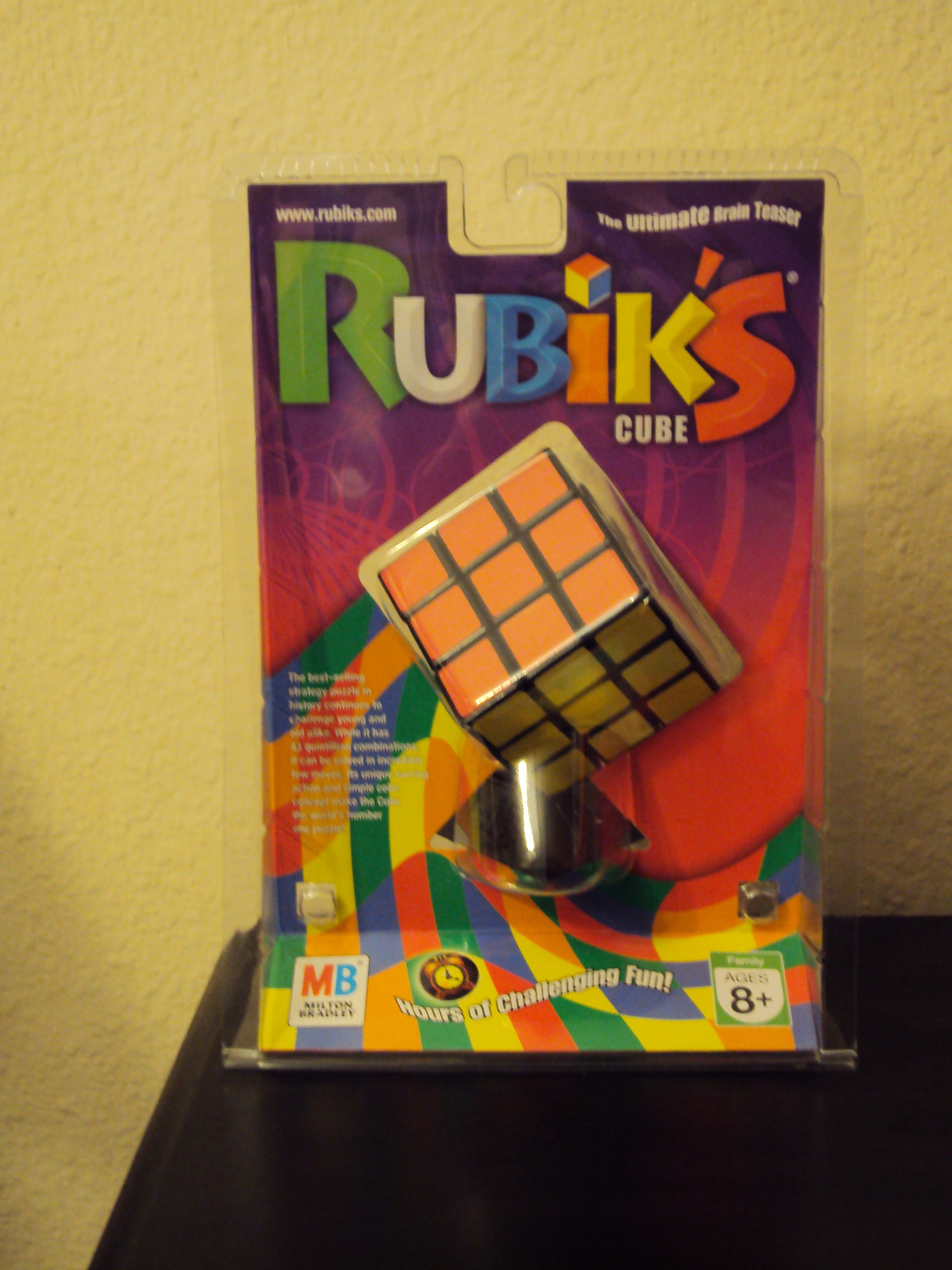
I don't believe I have actually ever solved a Rubik's cube, so after finding out that we are going to have a Rubik's cube competition at the USA Science and Engineering Festival I went out and bought one...for research purposes of course. After all, I am a scientist and my curiosity got the better of me as this website claims that I CAN learn how to solve a Rubik's cube. Working with a '7 steps solution guide of on how to solve the cube ' so far it seems that the key to solving a Rubik's cube is part muscle memory and part pattern recognition. I have only been able to solve one side so far...but I'll keep the blog posted periodically on my progress. Sign up a K-12 student here for the competition. There is plenty of time to learn how to solve the cube! Check out some back ground info on Rubik's cubes below.
In the process of learning how to solve a Rubik's cube I discovered the sport of ''speedcubing". World Record holders can solve the puzzle in less than 10 seconds! That is pretty amazing! Better get back to practicing.
What is out there? Is there life on other planets? People have pondered these questions for centuries as they have looked up into the night sky and wondered what might lie beyond. Pop culture is littered with these reflections in film, book and TV. After watching Steven Spielberg's E.T. as a kid, I was fascinated by the idea that an extraterrestrial life might like Reese Pieces and secretly hoped I could turn a Speak and Spell into some kind of communicator device, just like how E.T. 'phoned home'.
The question, "Does other intelligent life exist beyond our planet?" is something that Nifty Fifty speaker, astronomer, and author Dr. Seth Shostak has pondered and researched at the SETI Institute. Read more about his bio here and learn more about his research below.